Hosted VoIP & Cloud PBX Services

Move your business phone system to the cloud with Telerge and give your team a simpler, more flexible way to communicate. Our hosted VoIP and cloud PBX services help businesses manage calls, users, and everyday communication without relying on bulky on-site phone hardware.

Telerge brings together cloud calling, smart call management, and modern business communication tools in one easy platform. This makes it easier for teams to work from the office, from home, or across multiple locations.

Get your free quote now

Fill out the form below and an expert will reach out shortly.

Why Businesses Choose Hosted VoIP

Hosted VoIP is a phone system where the main infrastructure is managed off-site by the provider instead of being installed at your office. Your business uses the internet to access calling features, while the provider handles the core system in the background.

With Telerge hosted VoIP services, businesses can:

  • Reduce dependence on expensive on-premise hardware.
  • Add users and numbers more easily as the business grows.
  • Give employees access to business calling on desktop and mobile devices.
  • Use modern phone features without managing a complicated local PBX setup.

This makes hosted VoIP a smart option for small businesses, growing teams, and companies that want a cleaner and more scalable communication setup.

telerge
promise

What Is Cloud PBX?

Cloud PBX, also called hosted PBX, is a business phone system managed by a third-party provider in the cloud. Instead of keeping PBX hardware in your office, the system is handled remotely and accessed through your internet connection.

With Telerge Cloud PBX, your business can manage internal and external calls through a modern virtual phone system. Core calling functions like routing, voicemail, forwarding, and conferencing are handled digitally, which makes the system easier to manage and expand.

Hosted VoIP vs Cloud PBX

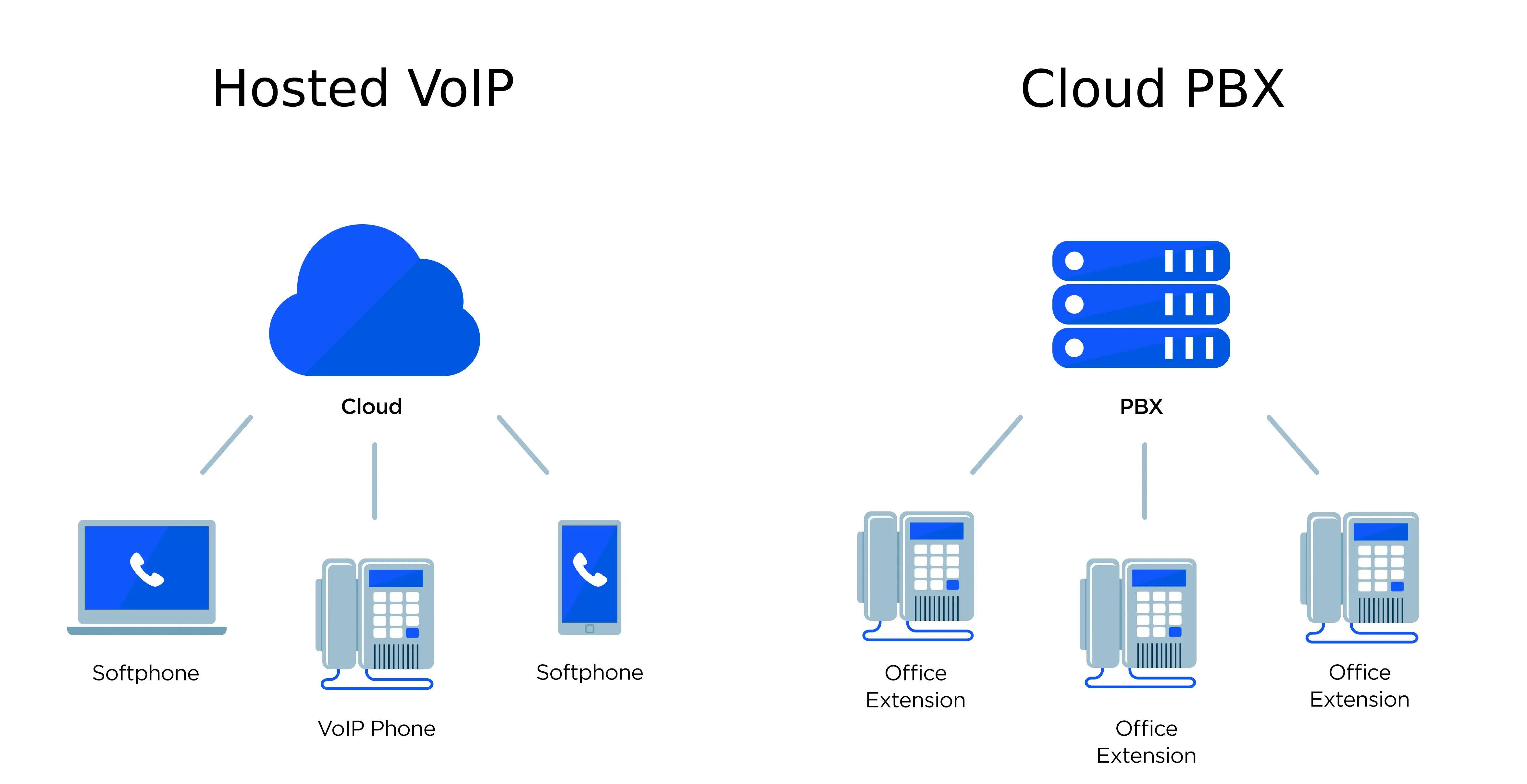
Hosted VoIP and cloud PBX are closely related, but they are not exactly the same thing. VoIP is the technology that sends voice calls over the internet, while cloud PBX is the full phone system that manages how those calls are handled across your business.

A simple way to understand it is this:

  • VoIP is how the call travels.
  • Cloud PBX is the system that manages the call flow, users, extensions, voicemail, and routing.

Telerge gives you both together in one hosted service, so you do not have to piece together different tools on your own.

telegre
promise

When UCaaS Makes More Sense

VoIP focuses on internet-based calling, but UCaaS goes further by combining voice with other communication tools in one cloud platform. A UCaaS solution can include video meetings, team messaging, contact center tools, chat apps, and integrations with business software such as CRMs.

Telerge can support businesses that want more than just a phone system. If your teams need calling plus collaboration tools in one place, a UCaaS-style setup can be the better long-term choice.

This is especially useful for:

  • Multi-location teams.
  • Remote and hybrid businesses.
  • Customer support and call center operations.
  • Businesses that want one platform instead of many disconnected apps.

What You Get with Telerge

Telerge is designed to give businesses a cloud communication system that is easier to use and easier to manage. Depending on your needs, your solution can include both cloud phone features and broader unified communication tools.

With Telerge, you can benefit from:

  • Hosted business calling over the internet.
  • Cloud PBX call control and routing.
  • Easy user setup and flexible scaling.
  • Mobile and desktop access for distributed teams.
  • A path from basic VoIP to full UCaaS as your business grows.

This helps businesses start with the right setup now and expand later without changing platforms again.

Hand holding smartphone with compass
promise

Best Fit for Businesses

Telerge Hosted VoIP & Cloud PBX services are a strong fit for businesses that want a modern phone system without the complexity of traditional PBX hardware. It works especially well for growing teams that want reliability, flexibility, and room to scale.

This service is ideal for:

  • Small and mid-sized businesses moving away from legacy phone systems.
  • Businesses opening new offices or supporting remote staff.
  • Call centers and customer service teams that need better cloud communication tools.
  • Companies looking for one provider for cloud calling and future UCaaS needs.

Why Telerge Instead of On-Premise Systems

Traditional PBX systems often require hardware, installation, maintenance, and more planning each time your team changes. Hosted cloud systems remove much of that burden by shifting the core system off-site and managing it through the provider.

That means Telerge can help you:

  • Launch faster.
  • Scale more easily.
  • Reduce hardware dependency.
  • Support modern work styles without being tied to one office location.
Hand holding smartphone with compass

FAQs –

Hosted VoIP is a business phone system where the main calling infrastructure is managed off-site by the provider and accessed through the internet. This reduces the need for on-site phone hardware and makes setup easier for many businesses.

Yes, hosted PBX and cloud PBX are generally used to describe the same type of off-site business phone system managed by a provider. Both refer to a PBX system that is delivered through the cloud instead of installed in your office.

VoIP is the technology used to send voice over the internet, while hosted PBX is the full phone system that manages routing, extensions, voicemail, and other business call functions. In simple terms, VoIP powers the call, and hosted PBX manages the phone system around it.

VoIP mainly covers internet-based calling, while UCaaS includes VoIP plus video, messaging, collaboration tools, and software integrations in one platform. UCaaS is usually the better option for businesses that want one complete communication system.

A cloud phone system is a strong option for businesses that want flexibility, easier scaling, remote access, and less hardware to manage. It is especially useful for modern teams that work across locations or expect to grow over time.